Dispatch, fleet, workshop, finance, compliance, and every driver on the road, connected in real time, in one platform. Not four systems bridged by phone calls and spreadsheets. Not a WhatsApp group standing in for software.
People from different departments cross-checking files and scrolling old chats to find where a loss happened, something one connected system would already know. None of that is on anyone's job title, and it stopped looking like a cost years ago. It still is one. Here's the three biggest.
Finance, Workshop, and Stores don't talk to each other. Nobody can trace a loss back to where it happened.
A driver fills up, tells you a number, you pay. No receipt trail, no way to know if a truck is suddenly burning 30% more.
It gets detained. The fine and the lost day both land on you.
These don't show up on a balance sheet either. They're just the water everyone's swimming in.
More trucks means more phones, more spreadsheets, more groups. When the person running them leaves, the company's history with them leaves too.
Industry-wide, warehouses lose 1.5 to 2% of revenue to shrinkage like this. Most companies just call it normal.
Insurers already offer lower rates to fleets that can prove where their trucks were and when. Most owners have that information, they just aren't using it that way yet.
Most owners file an expired document under bad luck.
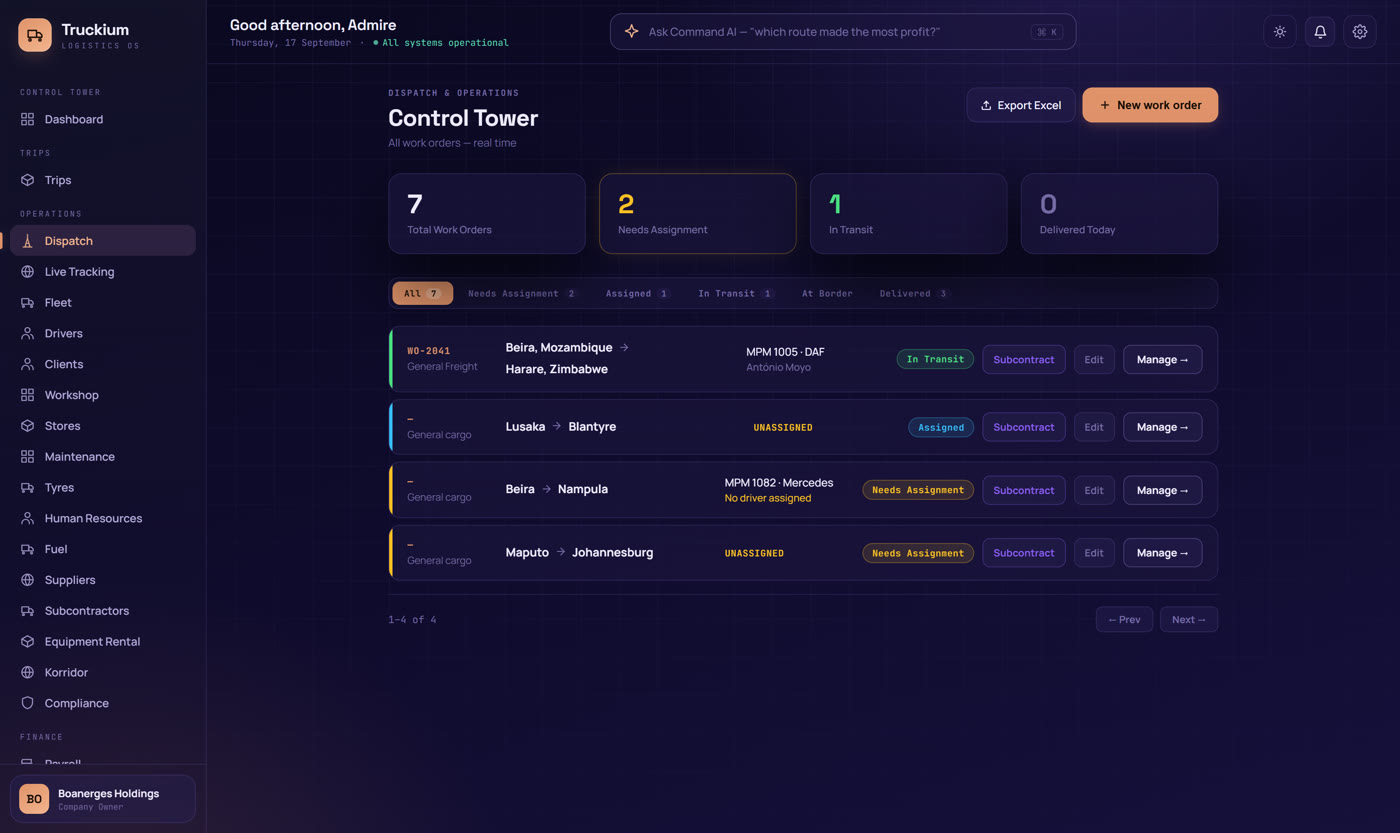
This is the actual dispatch board, not a diagram of one.
Ask which client to chase for payment, or how your margin is looking this month, and get a real number back, computed from your own live data, in seconds. Most systems can generate you a report. This one has an answer.
Adi's context is a live pull across trucks, invoices, compliance, fuel, bills, payroll, clients, and jobs, computed fresh every time you ask. When it tells you your margin is 18%, that number came from your actual invoices and costs, not a guess.
Fleet utilisation, fuel-to-revenue ratio, net margin, each one shown next to a real industry average, so "fine" and "actually a problem" stop looking the same.
Fleet's assistant knows about maintenance and flagged fuel logs. Stores knows about stock levels and pending orders. Compliance knows what's expiring. Nobody's stuck asking the wrong department's assistant the right question.
On the roadmap: ask exactly who last had a specific tool, or exactly when one truck's insurance expires, and get the specific answer, not just a count telling you to go check.
Dispatchers, fleet managers, workshop, HR, and finance each get a home screen built for their job, and it still feels as easy to use as the app they already know, just company-owned instead of borrowed.
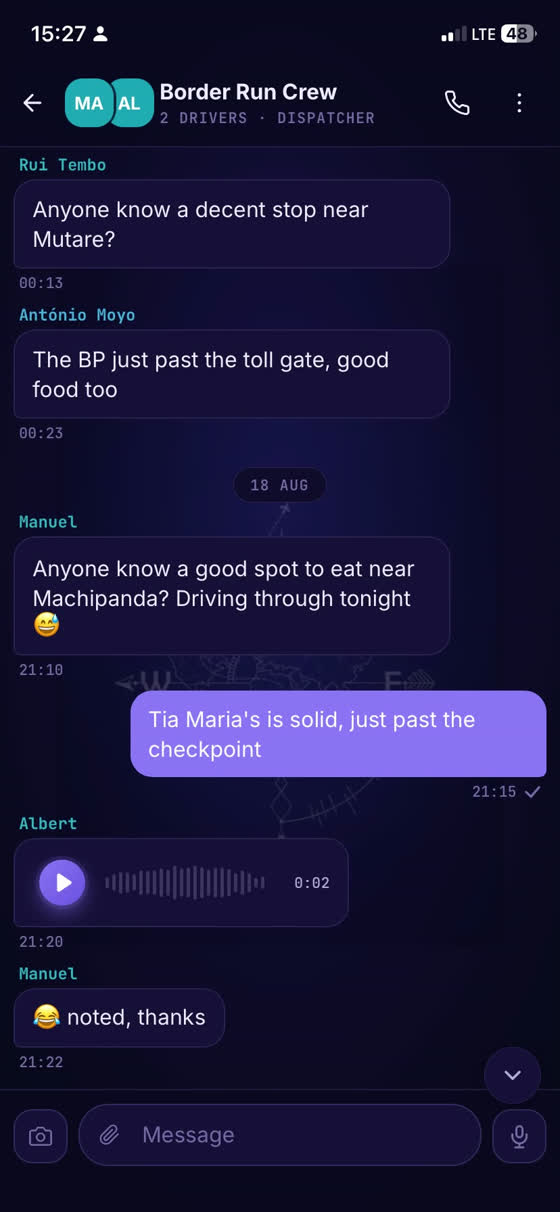
Every group, thread, and announcement is scoped to your company at the database level, not just hidden in the app. Staff at another carrier on Truckium cannot see, join, or discover your channels.
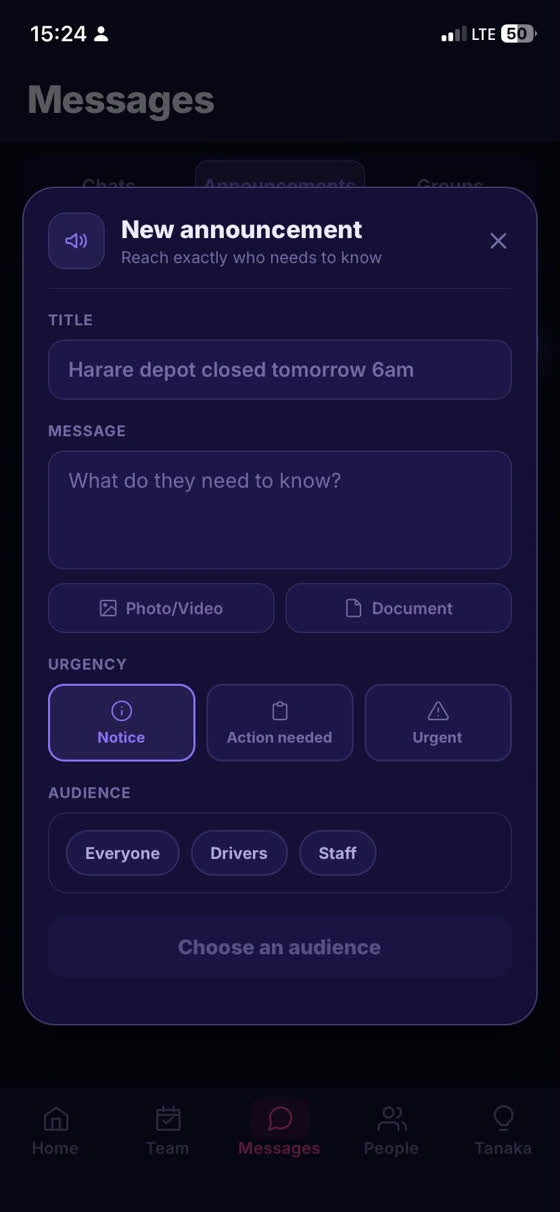
Send to Workshop only, Finance only, one depot, or everyone, with an urgency level and read receipts, so you know who's actually seen it.
When a dispatcher leaves, the client relationships, the group history, the institutional knowledge stay behind, because none of it was ever tied to his personal number.
The Owner's home screen rolls dispatch, fleet, finance, and compliance into a single business health score, with a staff leaderboard showing which dispatchers are actually winning and keeping clients.
How the business is actually running shouldn't depend on someone remembering to send an update.
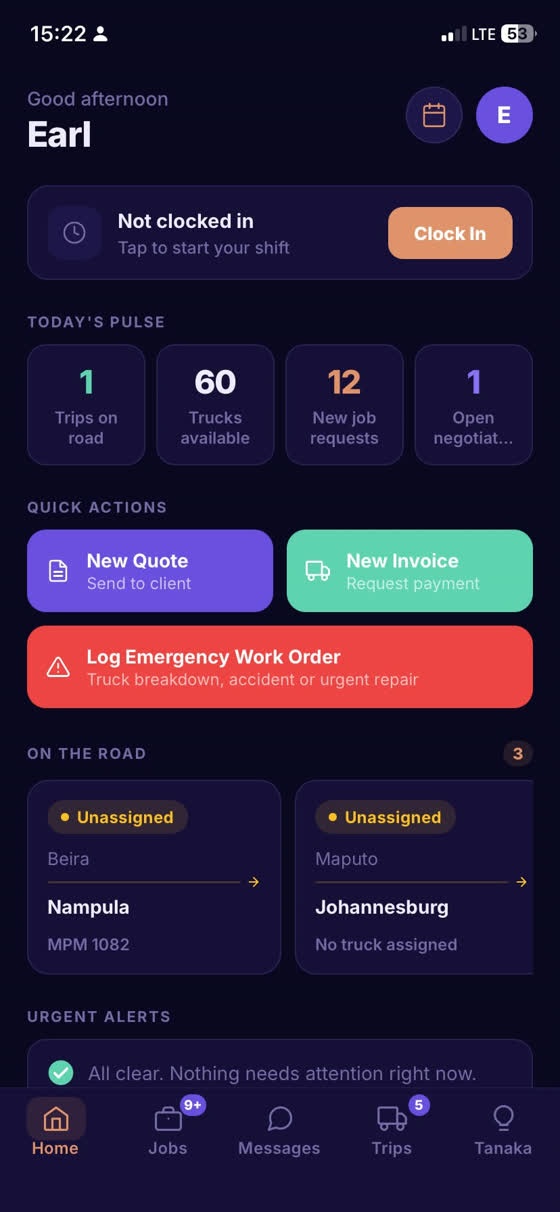
Trips on the road, trucks available, job requests waiting, all live, not something someone compiles for a Friday report.
A truck's insurance running out or a part running low shows up next to the day's trips, not buried in a spreadsheet nobody opens until it's too late.
Dispatchers, fleet managers, and workshop leads each see this for their own role, live, before a client or a boss has to ask where things stand.
Good drivers are scarce almost everywhere, and the best of them leave for better pay and better treatment. An app that respects a driver's time, pays transparently, and rewards good driving isn't a nicety, it's a retention argument.
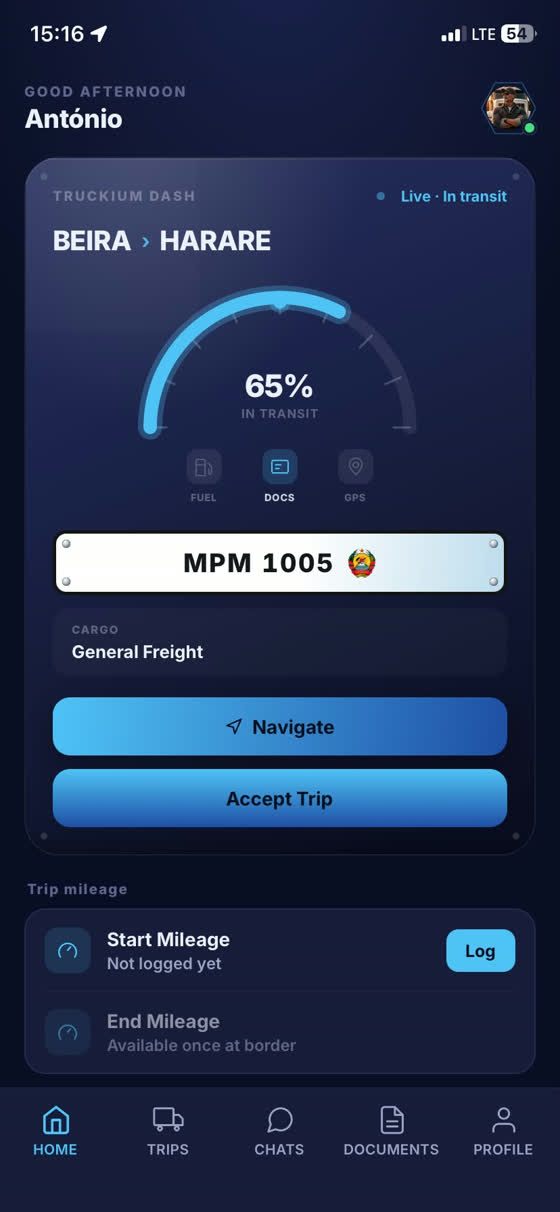
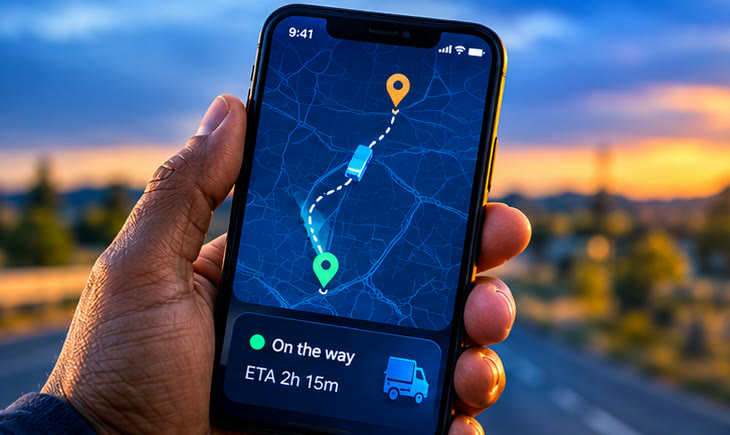
Live speed, distance-to-destination and ETA rendered as real backlit gauges, legible at a glance day or night, the way an actual dashboard is.
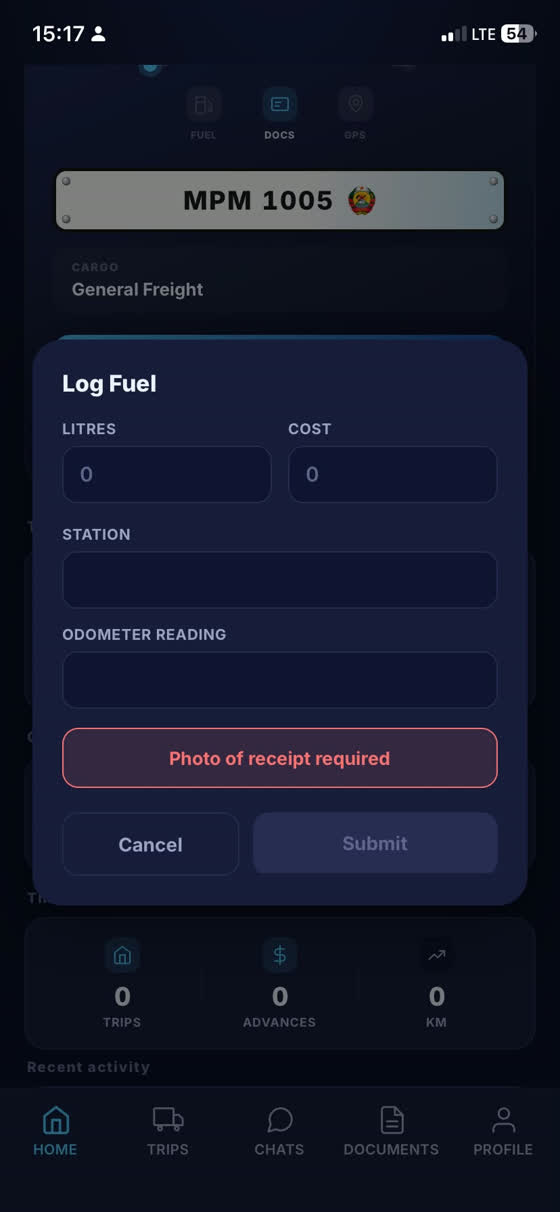
Litres, cost, station, odometer, and a required photo of the receipt, no photo, no submit. Queued on-device if there's no signal, synced the moment there is.
Flagged automatically the moment variance passes 25%: theft, a leak, or a fault, caught the same week instead of the same year.
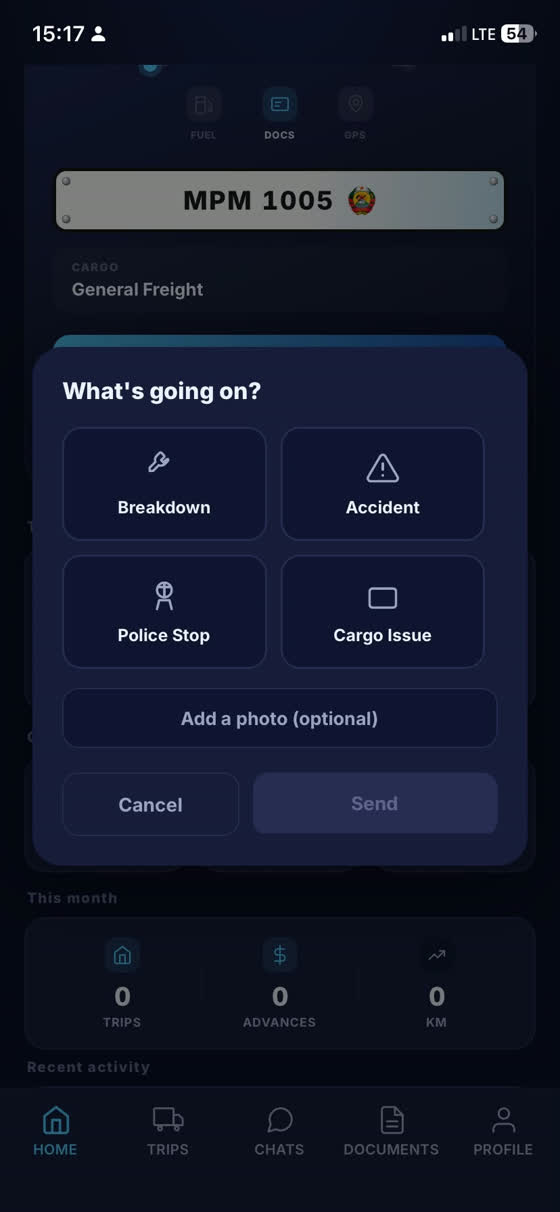
A structured incident report with an optional photo, not a garbled voice note to a dispatcher who's driving too.
Drivers who keep fuel variance under 15% build a real skill track and climb a leaderboard. Efficient driving becomes something a driver wants, not something dispatch nags about.
A client who opens an app built for their cargo, inside your company's own branded space, connected to your company and no one else's, feels personally handled instead of processed. That's the difference between a client who tolerates you and one who brings up your name unprompted when someone else asks who they use. Live tracking and proof of delivery aren't just operational efficiency, they're the reason a client recommends you without being asked.
Right now, that call lands on whoever happens to pick up the phone, not necessarily the person who actually knows. With their own app, a client checks the live location and status themselves, and if they still need to ask something, it goes into a chat thread with dispatch that the company can see and keep, not a driver's personal WhatsApp that disappears the day he changes numbers. Fewer interruptions for your dispatchers, and a client relationship that belongs to the company, not to whoever happened to answer.
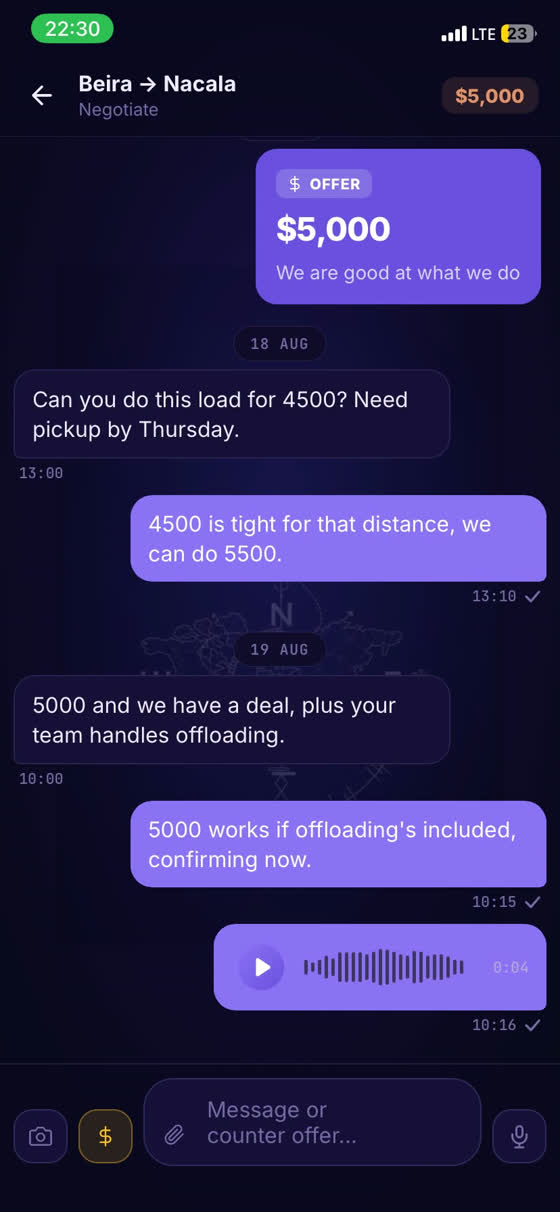
Finding loads on major cross-border corridors still runs mostly through informal WhatsApp groups today. The marketplace replaces that with verified cargo owners bidding directly, no agent fee, no waiting on a group admin to post the right load at the right time.
Criminals targeting this industry aren't just after cargo anymore, dispatch systems themselves are a documented target. If your "system" is paper and WhatsApp, there's nothing to secure in the first place. A single, real database with real access control is the thing that's actually defensible.
Cargo theft is a global problem, with South Africa, Brazil, Mexico, and India among the named hotspots, and organised crime networks are increasingly targeting logistics operators directly, not just their trucks. That's the environment every carrier is already operating in, whether their software acknowledges it or not.
Every table, trips, invoices, drivers, chats, is scoped to your company at the database level. Not filtered in the app. Enforced where the data lives, and unreadable to anyone outside your company, including other carriers on Truckium.
Every request runs over TLS. Documents, receipts, and proof-of-delivery records are stored encrypted, not just password-gated behind a login screen.
Role-based access down to the module: a workshop manager doesn't see payroll, and a dispatcher doesn't see HR records, by default, not as a setting someone has to remember to configure.
Everything above runs on this. A job in Dispatch becomes a workshop check, a fuel log, an invoice, and a compliance record, automatically, not sixteen separate tools bolted together.
Work orders, cross-border docs, subcontracting
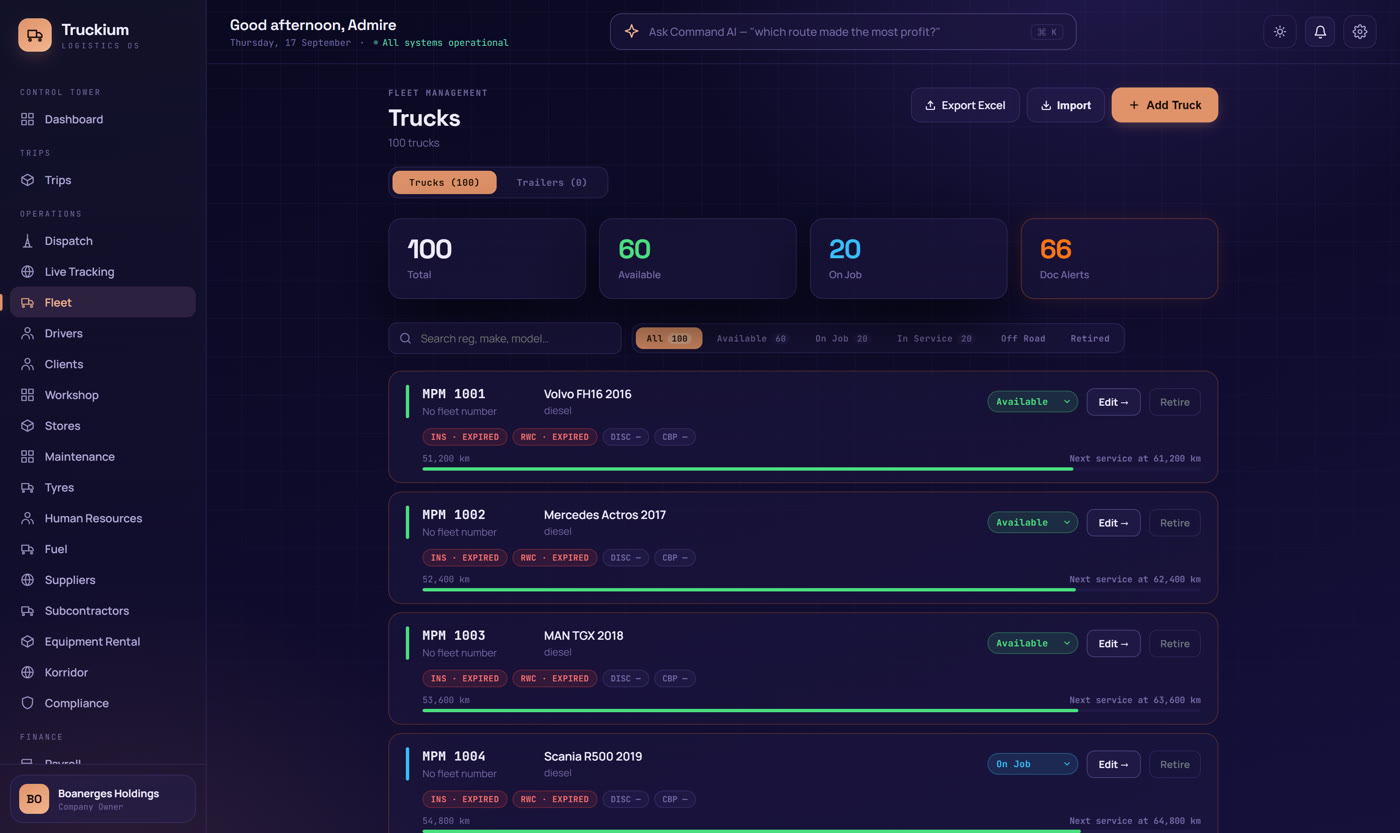
Service intervals, compliance docs, bulk import
Real-time GPS across the whole fleet
Job cards, mechanic scheduling, parts use
Parts inventory, purchase orders, tyres
Photo receipts, variance & fraud detection
Invoices, payables, aging, statements, VAT
Licenses, insurance, incidents, risk
Staff records, leave, advances, pay runs
Vendor accounts & statements
Backload & overflow capacity network
Trailers, generators, specialised gear
Verified cargo owners, live bidding
Ask your own operations data anything
Per-route, per-truck, per-client margin
Multi-site operations, one account
We're working closely with a handful of founding carriers to get every workflow right for how real fleets actually run, and founding partners get a direct line to that process, not a support ticket queue.
No self-serve signup. We onboard every carrier ourselves. Fill this in and we'll reach out within 48 hours.
We review every application personally and will be in touch within 48 hours.